Showing posts with label Revival. Show all posts

9 Sept 2010

Against Finney

In the second chapter of his book Pentecost ... Today? Iain Murray says this about the evangelist Finney, and refers to Elias

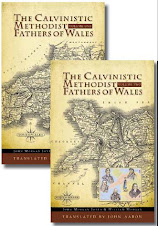
Finney’s teaching that revival should be normal and continuous, not extraordinary and occasional, depended for its success on a change in the content of revival. The same word now came to stand for any evangelistic campaign which gathered people together in numbers, and both Finney and his followers encouraged the switch. Finney had charged his opponents with being ‘enemies to revivals’. In reply they asserted that the opposite was the case and that it was for the very cause of revivals that they were speaking. (See, eg The Life and Labours of Asahel Nettleton 348-351). They feared that the new teaching was taking the work of the Spirit out of his own hands. ‘The influence of the Holy Spirit comes in only by the way,’ wrote Dod in his review of Finney’s lectures on Revivals of Religion (Princeton Essays 82). In Wales, John Elias, the Calvinistic Methodist leader, who had preached in many revivals, put his finger on the same point. When the new teaching first crossed the Atlantic, his question was: ‘Is there not a want of perceiving the corruption, obstinacy, and spiritual deadness of man, and the consequent necessity of the Almighty Spirit to enlighten and overcome him? (Letter to Rev Henry Rees, 2 March 1838: John Elias, Life, Letters and Essays Edinburgh: Banner of Truth, 1973, 259). As with brethren in the States, Elias dreaded lest ‘the legitimate results of erroneous principles shall be visited upon the ruined churches of our land.’ (The words are those of the author of the Preface to Letters of the Rev Dr Beecher and Rev Mr Nettleton on the New Measures’ in Conducting Revivals of Religion New York, 1828), 103).

15 Dec 2008

Quotation Revival

“We don’t have revival because the church does not feel the need for revival as it should .... Is it not more reasonable to ask how any of us can read and hear the Word of God without its having any effect upon us? It may be answered: Because we do not consider that it is the Word of God. Because we do not believe that they are words about real things, and not falsehoods and fables.”

3 Nov 2007

Letters 02

(To Mr Thomas Owen, prisoner in France)
Llanfechell 26 October 1822
I am going to Dolgelley Association today. I am very glad to hear that you go on so comfortably in the new chapel. I hope all things will continue pleasant till it is finished; and that the Lord will shew His approbation of the work, pouring His Holy Spirit on the means of grace, blessing the preaching of the Gospel for the salvation of many sinners.
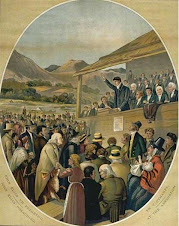
The revival goes on very delightfully in this island. The kindness of the Lord towards us is wonderful. His visits and the convictions under the Word are truly powerful. Very wild and hardened sinners are alarmed and converted; multitudes are made willing in the day of Christ's power. I have had the privilege of receiving hundreds into church-communion. I received one hundred at once in a certain place; in another place fifty, in another thirty, and in another thirty, and many in several other places. Besides, other ministers have received a great many into the church. This is the Lord's doing, and it is marvellous in our eyes. Indeed the church in our country is ready to cry out in wonder, asking, 'Who begat these? and from whence came these?' Let not my brethren in London be discouraged; God is the same with you.
(To Phoebe Williams - his married daughter)
Fron 10 February 1832
The news I have to communicate now is delightful and heart-cheering, especially in these evil and perilous times, and when so much bad news comes from every part of the world. I am very happy to inform you that there is a very great revival at Nebo, near Amlwch; more than fifty have been already added to the church there, in a short time. The most ungodly in the neighbourhood have been alarmed and soberised. The pillars of the kingdom of Satan have been thrown down and shattered, not by the pestilence, but through the Gospel. Now, instead of the laughter and idle talk in the corners of the chapel, the sighing of the penitent, the groans of the convinced, are heard; yea, most earnest prayers and hearty thanksgivings ascend to heaven. O! most delightful change. O! may it enhance and spread throughout all the Principality. The glorious work of grace in converting sinners is going on in other places; souls were added to the church at Pare, Gorslwyd and Pen-gorffwysfa,' and many were received to the society at Bethesda, and some at Llanfechell. Great rejoicing took place one night at W. Parry's premises at Llanfechell, when Mr. W. Roberts of Llannerch-y-medd, was preaching there: W. Morris and Ellen, formerly of the old shop, as well as others, entered the church. Very powerful revivals are carried on in several parts of Caernarvonshire, such as Llanystumdwy, Brynengan, and other places! It will be a wonderful thing if Wales should be favoured with such gracious operations as these, instead of the awful judgments that afflict many countries these days!
Oh may we long more earnestly and ardently for the gracious visitations of the Lord to our country and neighbourhoods, but especially to our own souls. I hope, my dear Phoebe, that you, my dear child, are not destitute of these delightful visits of heaven these days. May the Lord speak to your precious soul as you read His holy Word, and as you hear the preaching of the Gospel; and may you draw near to Him as a Father, through the blood of Christ; yea, may you come boldly to the throne of grace, to receive grace and mercy to help you in the time of need: help in need as wanted, according to circumstances and necessities, and in time, that is quite enough; no more is required. It is most profitable to take every trial and burden unto the Lord, to set before Him all your complaints, and to cast all your care upon Him, for He careth in a very kind and tender manner for us. We may safely entrust Him with the concerns of our bodies and souls, our temporal and eternal interests. He is very kind and pitiful, and ready to hear different cases of distress; able to bear all our burdens, to relieve all our wants, and wise to lead us through the intricate wilderness, and guide us safely to the end of the journey.

Quotation on revival

From here
"True religion does not consist in emotions. The passions of many are excited under sermons, without a change of heart! Others may be changed; their hearts broken, conscience tender, sin hated, self loathed, but perhaps without many tears. There is a great difference in the natural temperament of people, which accounts for the difference in their feelings under the Word preached. I confess that if people are easily moved under natural causes, but immovable and unaffected under sermons, it is a very bad sign..."
1819

1 Nov 2007

Revival

The word revival means the gracious visitation of God to His people in the ordinances of the gospel and by the outpouring of the Spirit. The results of revival include the bringing to life of that which was spiritually dead and the converting of sinners. In addition, the work of the church (Hab. 3:2), the hearts of God's people (Ps. 85:6), the Spirit's sanctifying work (Isa. 57:15), and the prayers, sermons, and worship of the church are profoundly benefited.
There is no true revival except of God's doing. He 'quickeneth all things' (1 Tim. 6:13, KJV). When the Holy Spirit works in a special way through the ministry of the gospel, then the unregenerate are raised to spiritual life, the sleeping are awakened, backsliders are restored, and lives are renewed and rearranged.
Some false things may pass under the name of revival: excitement unrelated to the fear of God; fear without a clear view of being lost without Christ; decisions apart from the power of spiritual life. Some may make a decision to join a denomination of Christians, yet they remain without the Spirit despite their profession of faith.
In fact, in movements that seek revival, there is a danger of leading people to think that to make a profession of faith is religion enough. Preachers may terrify their audiences instead of enlightening them by showing the danger of being without a profession of faith rather than showing the danger of being without godliness. Such tactics can multiply the numbers of their party without getting people safely transferred from the power of Satan to God.
Some may strive for the benefits of revival in order to justify a ministry that lacks the Spirit or to prove that their methods are right contrary to the assertions of others. However, when God brings revival, He works in recognizable ways.
The false retreat and disappear when the Lord comes. In the brightness of sunshine, candlelight is extinguished. The men who are under His gracious and holy operations are different from all others. They are self-denying, humble men who abhor sin, lament because of it, and loathe themselves because of their own sinfulness. The sovereign grace of God, which alone could save sinners such as themselves, produces a spirit of wonder and praise within their hearts. 'Not unto us but unto Him' is their whole song.
In true revival there is:
A reviving of true doctrine and practice of the truth, an attitude of humility and willing obedience, and deep enjoyment of God.
The conviction and conversion of sinners through Christ as well as crowds of people coming to the church to learn the ways of the Lord.
The glorification of God's grace manifested in the person of Christ and the unity and effectiveness of the body in accomplishing its purpose on earth.
A marked difference in believers who now embrace spiritual disciplines, change their behavior, fill their thoughts and speech with the things of God, and adopt eternal values and priorities. Some will be ready to ask, 'What is the cause of this great change in the behavior of men under the Word as compared with what it was before? Why do they tremble and mourn and rejoice while others do not do so under the same sermons?' However, is it not more reasonable to ask how any of us can read and hear the Word of God without its having any effect upon us? It may be answered:
Because we do not consider that it is the Word of God.
Because we do not believe that they are words about real things, and not falsehoods and fables.
Because we do not understand that they apply to us.
Things visible affect men because they are regarded as real, concrete things, but they behave toward the words of God as they do toward unfounded, false fables. Nevertheless, when the Spirit of God works savingly on men, He applies the truths of the divine Word to their mind and conscience, and they are then seen to be real. They hear God speaking through His Word to them. They appreciate the worth and feel the infinite weight of the things in the Bible. They look on the things that are not seen with new eyes of faith.
When the Spirit of God convicts sinners, they see what the law of God requires of them, and that it threatens them. As they hear about the bad miserable condition of sinners, they see the sinfulness of their own condition, and they hear the sentence of condemnation from the throne of God! Is it not reasonable to fear and mourn? Who shall stand?
In this condition, when they then encounter a Savior and a free salvation solely of grace, how can they but rejoice? Then the things of the Spirit fill their affections. Is it not reasonable for them to love and praise God, delight in His work, and seek to live to His pleasure? It is then that the poorness of earth and of all temporal things will be revealed to them. They see themselves as strangers on the earth. They follow Christ and travel toward a better country, despising the world. When God visits His church, according to His promises, effects follow that make people shout, 'This is the finger of God!'
The church does not feel the need for revival as it should. God alone can make the blessings of a revival to be valued. He has promised, and He will fulfill. Let us pray fervently in faith, expecting the fulfillment of His precious promises. God in His grace can lay bare His arms, grant a true revival, and perform a true reformation. Let us pray without tiring, and let us wait without becoming weary. Oh, let Him hurry, let Him hurry! Amen.